

Pauline Hanson is one of the most recognisable and controversial figures in Australian politics. Born in Queensland in 1954, she worked in several small businesses, including a fish-and-chip shop, before entering public life.
Her political career began in local government when she was elected to the Ipswich City Council in 1994. Two years later, Hanson won the federal seat of Oxley. Although she had originally been selected as a Liberal candidate, the party withdrew its endorsement before the election following controversial comments she made about government assistance for Indigenous Australians.
Hanson entered the House of Representatives as an independent. Her 1996 maiden speech attracted national attention because of its strong criticism of immigration and multiculturalism. In 1997, she helped establish Pauline Hanson’s One Nation, a political party built around nationalism, lower immigration, economic protectionism and opposition to multicultural policies.
After losing her parliamentary seat in 1998, Hanson made several unsuccessful attempts to return to politics. In 2003, she was convicted of electoral fraud and spent 11 weeks in prison. However, the Queensland Court of Appeal later overturned the convictions.
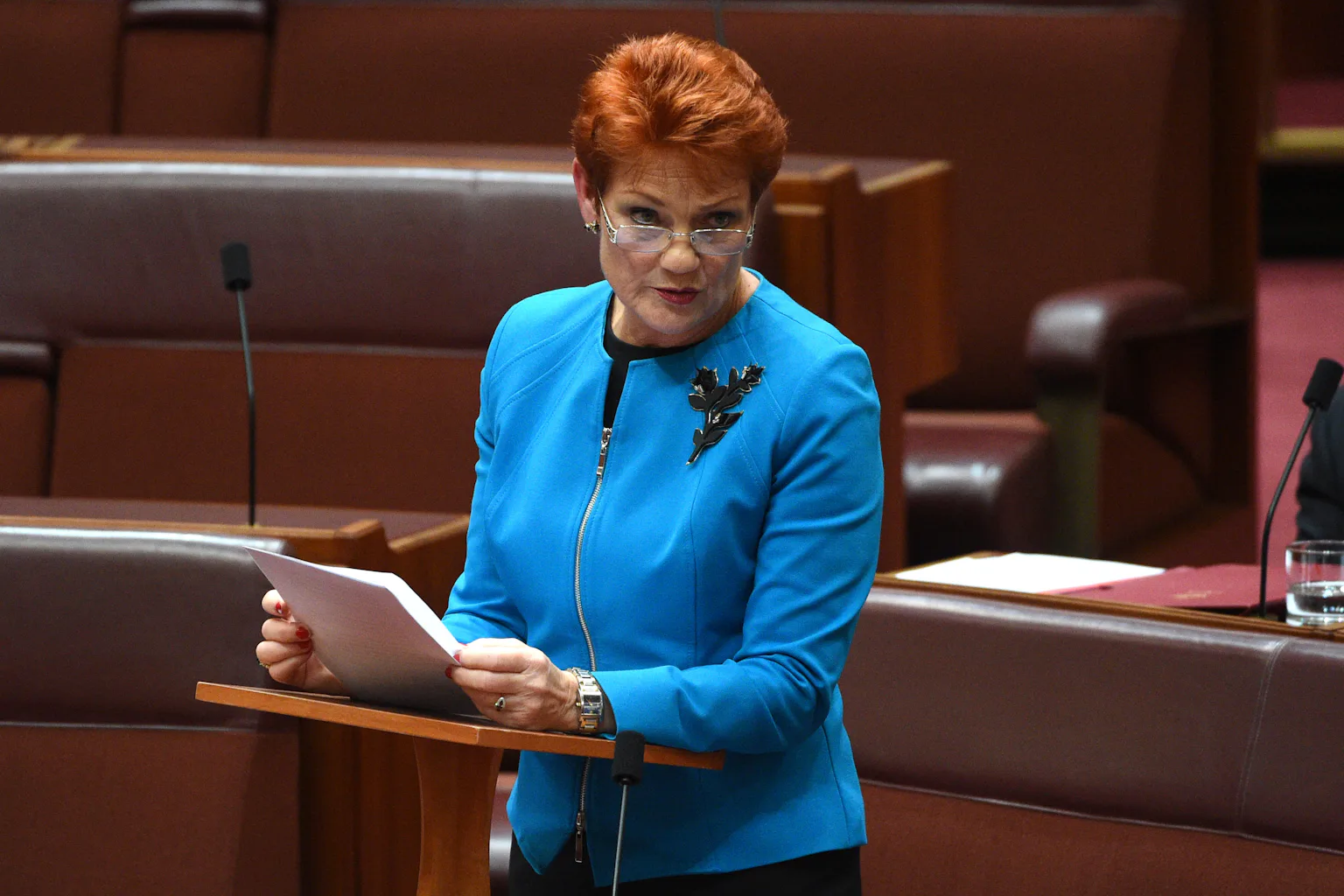
Hanson returned as leader of One Nation in 2014 and was elected as a senator for Queensland in 2016. Her return demonstrated that she still had a loyal political following, particularly among voters who believed that Australia’s major parties were ignoring concerns about immigration, national identity and regional communities.
Since returning to Parliament, Hanson has remained a prominent voice in debates over immigration, Islam, cost-of-living pressures and government spending. Her supporters describe her as a politician who speaks openly about subjects others avoid. Her critics argue that her language divides communities and increases prejudice.
Whether admired or strongly opposed, Pauline Hanson has influenced Australian political debate for three decades. Her ability to disappear from national politics and later return to Parliament makes her career one of the most unusual stories in modern Australian public life. (Australian Parliament, ABC News)